Best Age to Start Anti-Wrinkle Treatment: What You Need to Know
“What’s the right age to start anti-wrinkle treatment?” It’s probably the question we get asked most at our Heanor clinic, and if you’re hoping for a tidy answer like “27” or “35,” I’m afraid there isn’t one. Skin ageing is messy and personal. It depends on your genetics, how much sun you’ve had over the years, your lifestyle, and honestly, what you actually want from treatment in the first place. The “right” age is really just the age at which treatment starts to make sense for you.
Still, there are patterns worth knowing if you’re weighing this up for the first time.
Why So Many People Are Starting Earlier
A decade or two ago, anti-wrinkle treatment was something people associated with their 40s and 50s, a way to soften lines that had already settled in. These days, it’s not unusual at all to see people in their late 20s and early 30s sitting down for a consultation, and not because they’re covered in wrinkles. Most of them just want to get ahead of the problem before it starts.
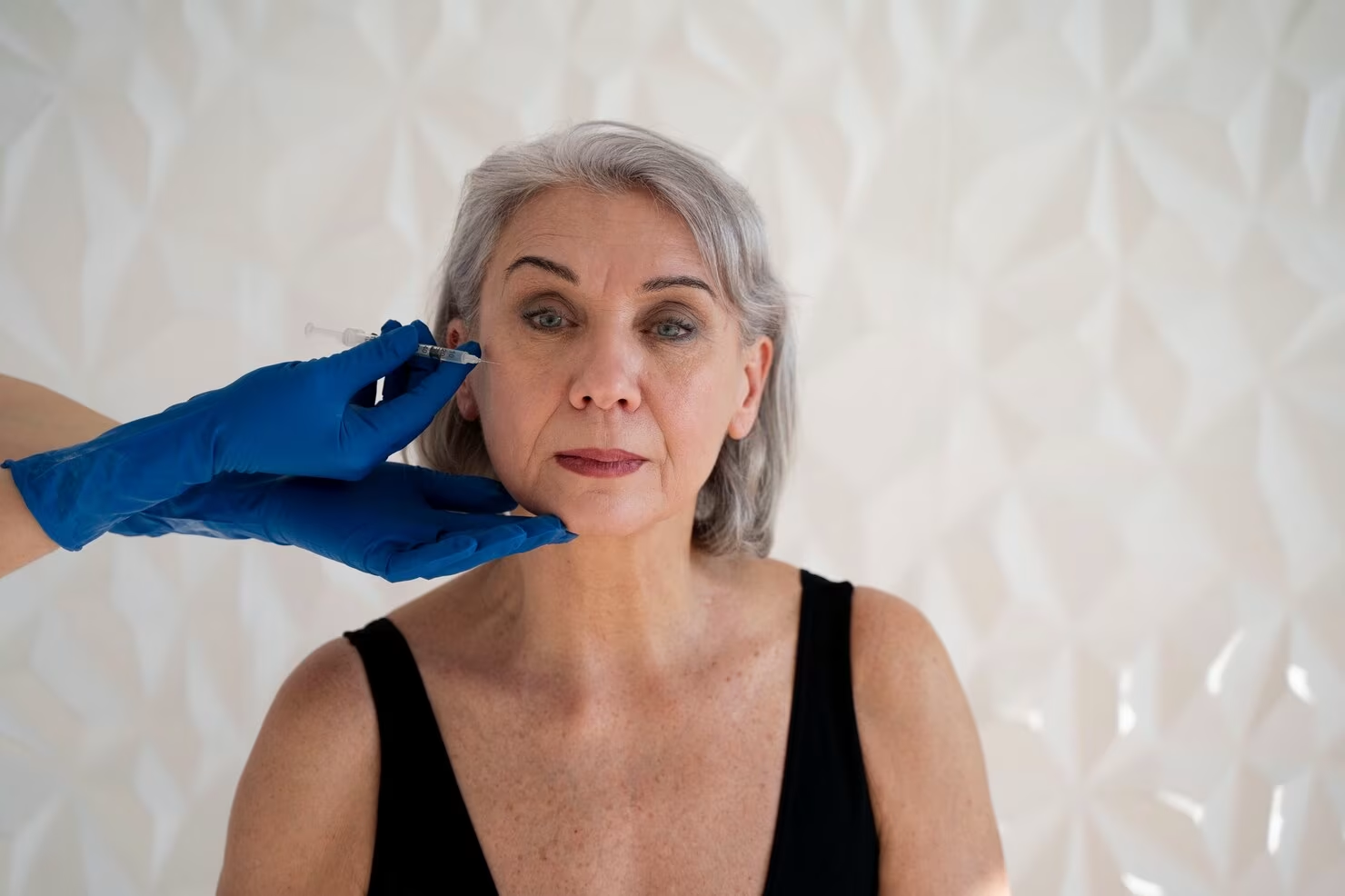
This is what’s often called “preventative” treatment, or sometimes “baby Botox” (not the catchiest name, but it’s stuck). The idea is simple enough: by gently relaxing the small facial muscles responsible for repeated expressions, think frown lines between the brows, or crow’s feet when you smile, you reduce how much those muscles crease the skin above them. Do that consistently over the years, and you may end up with fewer deep, permanent lines down the road.
That said, I want to be upfront about something: earlier isn’t automatically better. This is a personal choice, not something anyone needs medically. Plenty of people are perfectly happy waiting until lines actually start to bother them before they consider anything at all, and there’s nothing wrong with that either.
A Quick Word on How Skin Actually Wrinkles
It helps to understand what’s actually happening here, because it explains why timing matters at all. Wrinkles tend to form in two ways. There are dynamic lines, which only show up when you make an expression, smiling, frowning, raising your eyebrows. And there are static lines, which stick around even when your face is completely at rest, caused by years of that same muscle movement combined with the slow loss of collagen and elastin that comes with age.
Anti-wrinkle treatment mainly targets the dynamic kind, which is why it works so well on areas like the forehead, the “elevens” between the eyebrows, and crow’s feet, these are almost entirely driven by expression. It’s also why timing can make a real difference. Treating a dynamic line before it has a chance to become etched in at rest is, generally speaking, easier than trying to soften a line that’s been there for twenty years.
So, Roughly Speaking, What Happens at Each Age?
I’ll caveat this by saying every face is different, but here’s the general pattern we tend to see.
In the mid-to-late 20s, most people genuinely don’t need treatment yet. This is really the window where good habits, especially daily SPF, do far more for your skin than any injectable ever could. That said, some people with particularly strong, early expression lines do choose light preventative treatment around this age, and that’s a perfectly reasonable choice.
By the early-to-mid 30s, fine lines often start showing up when you smile, frown, or raise your eyebrows, nothing dramatic, just the first signs. This is when preventative treatment tends to be most popular, since it can help stop those lines from gradually deepening into permanent creases.
Come the 40s, expression lines are often visible even with a relaxed face, and this is the age bracket most people still associate with anti-wrinkle treatment. Results here tend to be the most noticeable, since there’s more to smooth out, the forehead, frown lines, crow’s feet, all of it.
In the 50s and beyond, treatment is still very effective, though it’s often paired with other approaches like dermal fillers or skin rejuvenation to deal with volume loss and skin texture alongside the muscle-related lines.
But honestly, these are loose patterns, not rules carved in stone. We regularly see patients in their early 30s with deeper lines than people we treat in their 40s. It really comes down to how expressive someone’s face naturally is, how much sun exposure they’ve had, even things like whether they smoked in their 20s. That’s exactly why a proper consultation matters so much more than following an age chart off the internet.
Weighing Up Starting Early
There’s real appeal to starting young, but it’s worth thinking it through properly rather than jumping in because a friend recommended it.
On the upside, preventative treatment may slow how quickly deep, etched-in lines develop. Done well, a subtle, low-dose approach keeps your expressions natural while smoothing things out, nobody should be able to tell you’ve had anything done. And there’s something to be said for building a long-term relationship with a practitioner who gets to know your face over the years, rather than seeing someone new each time.
On the other hand, it’s worth being realistic about the commitment involved. Results typically last three to four months, so starting in your late 20s means a lot of repeat appointments stretched over decades. The cost adds up too, so it’s worth thinking of this as an ongoing part of your routine rather than a single purchase. And going in and out of treatment inconsistently, starting, stopping, starting again, generally doesn’t give as good results as a steady, well-spaced routine.
Neither path is right or wrong here. Some people prefer to start subtly in their late 20s and stay consistent. Others would rather wait until their late 30s or 40s and treat lines once they’re actually there. A good practitioner should be happy to support whichever one suits you, without nudging you toward treatment you don’t need.
It Really Isn’t Just About Age
If there’s one thing I’d want you to take away from this, it’s that age is only one piece of the puzzle. Genetics play a huge role, some people simply develop lines earlier or later than others, regardless of what they do. Sun exposure and smoking history both speed things along considerably. How expressive your face naturally is matters too; if you’re someone who laughs and frowns a lot, you’ll likely see lines sooner than someone with a more reserved expression. And then there’s the simple matter of what you actually want, some people are after subtle prevention, others want to address lines that are already there.
This is really why a proper consultation beats chasing a number. At SJ Dental & Facial Aesthetics, every treatment plan starts with an honest conversation about your skin, what’s bothering you (if anything), and what a natural-looking result actually means to you personally.
Can You Start Too Early?
Yes, honestly. A responsible clinician should tell you if treatment isn’t necessary yet rather than just taking your money. Anti-wrinkle treatment isn’t offered to anyone under 18, and for a lot of people in their early-to-mid 20s, a decent skincare routine and consistent SPF will genuinely do more good than injectables at that stage. If a practitioner is pushing you toward treatment you clearly don’t need, that’s a red flag worth listening to.
Can You Start Too Late?
Not really, no. Preventative treatment can slow new lines from forming, but anti-wrinkle injections still work well at softening established wrinkles whatever your age. We’ve had patients start in their 50s and 60s and get excellent, natural results.
The Things That Help Regardless of Treatment
Whether or not you ever try anti-wrinkle treatment, a few habits genuinely move the needle on how your skin ages. Daily SPF is probably the single biggest one. UV exposure accelerates fine lines, pigmentation, and loss of elasticity more than almost anything else, and a broad-spectrum SPF 30+ worn daily (yes, even under grey Derbyshire skies) does more for ageing skin than people give it credit for. A consistent skincare routine helps too, particularly active ingredients like retinoids, which are often available on prescription and support collagen production over time. Not smoking matters a great deal, since it breaks down collagen and elastin faster than almost any other lifestyle factor. And while hydration and sleep won’t transform your skin overnight, they do affect how plump and resilient it looks day to day.
None of this replaces treatment if treatment is what you want, but it works alongside it. Most of our patients combine a solid skincare routine with occasional treatment, rather than relying on one or the other.
Talk to Someone First
Honestly, the best way to figure out if and when anti-wrinkle treatment is right for you is just to sit down with someone qualified and talk it through. At SJ Dental & Facial Aesthetics in Heanor, Derbyshire, Dr Shraddha Jagani takes the time to actually understand your skin and what you’re hoping for before recommending anything, always with an eye toward natural, refined results rather than a one-size-fits-all approach.
A good consultation should cover what’s actually going on with your skin and what’s realistic to address, whether your lines are dynamic, static, or a bit of both, how different doses and areas might suit your particular face, and a clear picture of cost and recovery so there are no surprises. And if treatment genuinely isn’t the right fit for you yet, that should be said plainly, sometimes the better recommendation is simply a stronger skincare routine.
So whether you’re 28 or 58 and curious about anti-wrinkle treatment, the best next step is just to ask.
Ready to find out more? Book your consultation with SJ Dental & Facial Aesthetics today.